Unspent CSR Funds in India: Why Children Are Losing Out and What Needs to Change
CSR spending in India has the potential to create meaningful change in children's lives by supporting education, healthcare, nutrition, and protectio....
Read More
In the last decade, corporate social responsibility India has moved well beyond token donations. It has become a structured, legally mandated force for social good. From funding classrooms in remote villages to supporting child nutrition programmes, companies across India are channelling resources into issues that matter most — and few issues matter more than securing the rights and futures of children.
For organisations like CRY (Child Rights and You), this shift has opened new pathways to reach children who have historically been left behind. The convergence of CSR initiatives and child rights work is creating measurable, lasting change across the country.
Corporate social responsibility (CSR) refers to the commitment businesses make to operate ethically and contribute positively to society, beyond their core commercial activities. In practice, this means investing in areas like education, health, environment, and community development.
In India, CSR is not just a voluntary gesture. It is a legal obligation under the Companies Act, 2013, making India one of the first countries in the world to mandate CSR spending by law.
Section 135 of the Companies Act, 2013 requires companies with a net worth of ₹500 crore or more, a turnover of ₹1,000 crore or more, or a net profit of ₹5 crore or more to spend at least 2% of their average net profit from the preceding three years on CSR activities. This legislative push has transformed the scale of corporate giving in India significantly.
According to the Ministry of Corporate Affairs, CSR spending by eligible companies has grown substantially since the law came into effect, with education and skill development consistently among the top receiving sectors.
CSR funds in India are directed across a range of social priorities. The most significant areas include:
Education, in particular, receives a large share of CSR investments — making it one of the most impactful sectors for children's development.
Despite significant progress over the years, millions of children in India continue to face barriers that deny them a safe, healthy, and educated childhood. Children from low-income households, tribal communities, and marginalised groups are the most vulnerable.
According to UNICEF India, key challenges include limited access to quality education, child labour, malnutrition, lack of safe drinking water, and poor sanitation in schools. These issues compound each other, keeping children trapped in cycles of poverty and exclusion.
India has made remarkable strides in school enrolment, yet quality of learning remains a serious concern. Many government schools face infrastructure gaps — insufficient classrooms, a lack of trained teachers, and poor learning materials.
The Annual Status of Education Report (ASER) has consistently highlighted that a large proportion of children in rural India cannot read basic text or perform simple arithmetic even after several years of schooling. Bridging this learning gap requires sustained investment — which is where CSR in education plays a vital role.
The COVID-19 pandemic severely disrupted education across India. School closures, lack of digital access, and household financial stress pushed many children — especially girls — out of the education system.
As per UNESCO data on India, millions of children faced learning loss during the pandemic years. Returning these children to school and supporting their catch-up learning has become one of the most urgent priorities in inclusive education India.
Also Read: A Review of the National Education Policy (NEP) 2020
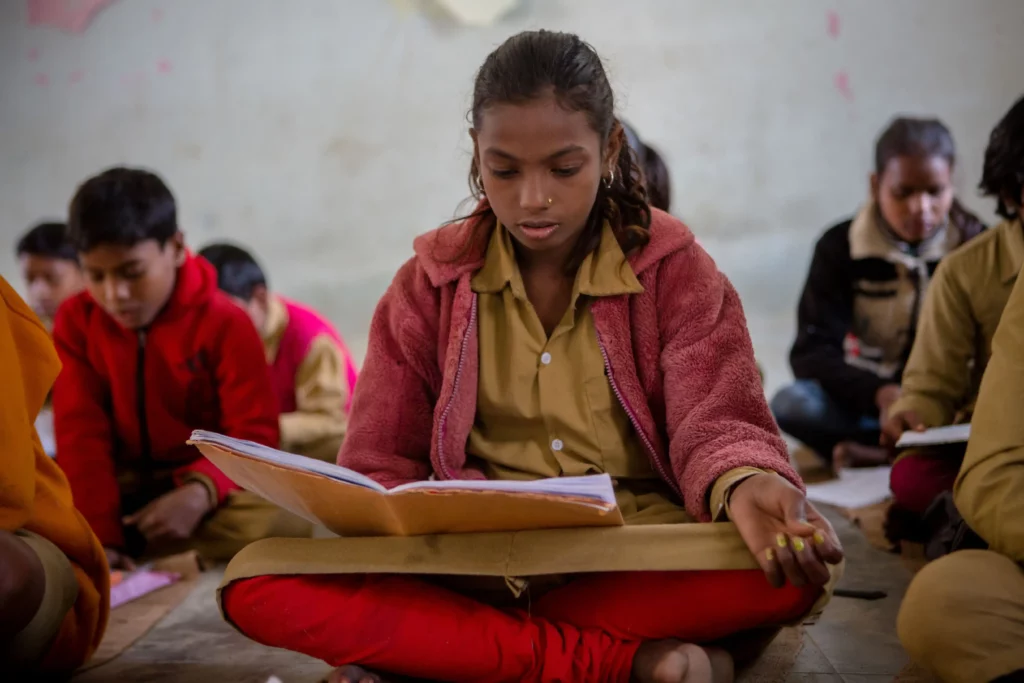
CSR initiatives are filling critical gaps that government programmes alone cannot address. Companies are partnering with NGOs, local bodies, and community organisations to build learning centres, train teachers, distribute learning materials, and set up digital classrooms in underserved areas.
Some of the most impactful CSR programmes for children focus on:
These efforts are not standalone acts of charity — they are part of a growing ecosystem of inclusive education India that works to ensure every child, regardless of geography or background, has access to quality learning.
Also Read: Importance of Education for Underprivileged Children
Child rights go beyond schooling. They encompass the right to survive, to be protected from violence and exploitation, to participate in decisions that affect their lives, and to develop to their full potential.
CSR initiatives are increasingly recognising this holistic view. Companies are funding child helplines, supporting legal aid for children in distress, backing awareness campaigns against child labour and child marriage, and contributing to child-friendly spaces in disaster-affected areas.
India's Protection of Children from Sexual Offences (POCSO) Act and the Right to Education (RTE) Act provide the legal backbone for child rights in India. CSR investments that support implementation of these laws — through awareness, community engagement, or institutional support — amplify their reach significantly.
A robust CSR monitoring framework is essential to ensure that funds meant for children actually reach them. More companies are now adopting third-party impact assessments and outcome-based reporting to measure real change on the ground, not just inputs and expenditures.
Support a Child's Right to Education
Across India, the impact of CSR on child rights and education is visible in tangible ways:
Digital Learning in Rural Schools: Several corporations have invested in setting up computer labs and digital learning tools in government schools across rural India. This has helped bridge the technology divide and improved learning outcomes for thousands of children.
Remedial Education Programmes: Companies partnering with NGOs have supported after-school learning centres that help children who are falling behind catch up with their peers. These programmes have shown significant improvements in reading and numeracy skills among participating children.
Child Labour Elimination Projects: In collaboration with community organisations, some CSR programmes have successfully transitioned children from hazardous work back into schools, while also supporting their families with livelihood alternatives.
Girls' Education Initiatives: Targeted CSR programmes supporting girls in staying in school — through sanitation facilities, safety measures, and scholarships — have helped improve enrolment and retention rates in several states.
These examples reflect a broader truth: when corporate resources are aligned with community needs and guided by a strong CSR monitoring framework, the results for children can be transformative.
Also Read: Encouraging Girls Toward STEM Careers
The role of corporate social responsibility India has expanded far beyond annual cheques and token gestures. Today, CSR initiatives are reshaping the landscape of child rights and education — funding classrooms, protecting vulnerable children, and giving millions of young lives a chance they might not otherwise have had.
Yet the work is far from complete. Millions of children across India still await access to quality education, protection from exploitation, and the chance to simply be children. Expanding inclusive education India requires consistent effort, collaboration, and accountability.
A strong CSR monitoring framework, rooted in outcomes rather than just spending, will determine how much of this potential is realised. When businesses, NGOs, communities, and governments work in concert — with children at the centre — the transformation becomes not just possible, but enduring.
Organisations like CRY work at this intersection every day, ensuring that the rights of every child in India are not just spoken about, but truly protected and fulfilled.
Also Read: Child Rights in India
CSR in education plays a vital role in bridging gaps that the public system alone cannot fill. Companies fund infrastructure such as classrooms and libraries, support teacher training, provide learning materials, and run digital literacy programmes in underserved areas. These investments help improve enrolment, reduce dropout rates, and raise the overall quality of learning for children across India.
Education consistently ranks among the top sectors receiving CSR funds in India. According to the Ministry of Corporate Affairs, a significant share of total CSR expenditure every year goes towards education and skill development. Child welfare activities, including nutrition, protection, and healthcare, also receive substantial allocations as companies align their CSR priorities with national development goals.
Companies looking to invest in child rights through CSR can partner with CRY by identifying shared focus areas such as education, child protection, or community development. CRY works with corporates to co-design programmes, implement on-ground interventions, and provide regular impact reporting. Such partnerships ensure that CSR funds reach the most vulnerable children and create measurable, lasting change.
Some of the most impactful CSR initiatives for children in India include digital classroom programmes in rural government schools, remedial education centres for out-of-school children, mid-day meal and nutrition support projects, and child labour elimination drives. Initiatives that combine education with protection — helping children stay in school while keeping them safe — tend to deliver the deepest and most sustained impact.
CSR spending in India has the potential to create meaningful change in children's lives by supporting education, healthcare, nutrition, and protectio....
Read More
Today's businesses are expected to create value not only for shareholders but also for society. This is where corporate social responsibility can mak....
Read More All our efforts are made possible only because of your support
 Your donations are tax exempted under 80G of the Indian Income Tax Act
 Your donation transactions are completely safe and secure


Spread the word on social media and join the movement to raise awareness about the importance of girls completing their education.


Spread the word on social media and join the movement to end the shame around periods. #LetsTalkAboutPeriods