Children and Social Media: Staying Safe from Online Risks
Social media is now a regular part of many children's lives, helping them learn, connect and have fun. However, it also brings risks such as bullying....
Read More
India has made significant progress in expanding education in India, but many children are still missing out on their basic right to learn. The Ministry of Education released the UDISE+ 2025–26 report on 8 July 2026, highlighting the scale of India's school education system. It recorded 24.72 crore enrolled students from pre-primary to higher secondary levels, supported by 1.02 crore teachers across 14.67 lakh schools, including 10.05 lakh government schools. While enrolment has improved over the years, ensuring that every child stays in school until they complete their education remains a major challenge.
Although India has introduced several policies to improve school enrolment, millions of children continue to remain outside the education system. The problem becomes more visible during the secondary school years, when dropout rates increase sharply. Children from economically weaker families, migrant communities, remote regions, and socially disadvantaged groups are the most affected. Unless these challenges are addressed together, achieving universal education in India will remain difficult.
Several social, economic, and structural challenges continue to prevent many children from accessing and completing their education.
Many families struggle to afford school-related expenses such as uniforms, books, transport, and stationery. Financial hardship also affects school readiness, making it difficult for children to begin and continue their education.
Also Read: https://www.cry.org/blog/importance-of-education-for-underprivileged-children/
Many children leave school to work or manage household responsibilities. At the same time, barriers to Girl Child Education, early marriage, and discrimination against marginalised communities continue to increase school dropout rates.
Also Read: https://www.cry.org/blog/what-is-child-labour-in-india/
Children in remote areas often lack access to quality schools, trained teachers, and learning resources. Frequent migration, displacement, language barriers, and disrupted schooling further reduce attendance and make returning to education far more difficult.
When children are denied education, the consequences extend well beyond childhood. It affects their future opportunities, well-being, and the country's long-term social and economic progress.
Children who leave school early often lack the skills needed for stable, well-paying jobs. This limits their earning potential, increases poverty, and reduces opportunities for long-term economic growth.
Out-of-school children are more vulnerable to child labour, trafficking, early marriage, and abuse. Education helps protect children by building confidence, awareness, life skills, and better opportunities for a safer future.
Education improves physical and mental well-being, builds confidence, strengthens decision-making skills, and encourages social development. Children who stay in school are more likely to lead healthier and more independent lives.
The Government of India has introduced several policies and programmes to improve access to education, reduce dropout rates, and ensure every child has the opportunity to attend school. While these initiatives have helped increase enrolment, continued implementation and community support remain essential to reach every child.
Also Read: https://www.cry.org/blog/what-is-the-right-to-education-act/
The Right to Education (RTE) Act, 2009, guarantees free and compulsory education for all children between the ages of 6 and 14 years. It aims to ensure that no child is denied schooling because of financial or social barriers. The Act also sets standards for school infrastructure, teacher qualifications, pupil-teacher ratios, and inclusive learning environments.
By making education a legal right, the Right to Education Act has played an important role in improving school enrolment across the country. However, ensuring that children not only enrol but also stay in school and complete their education requires continued efforts from governments, communities, parents, and civil society. Strengthening the implementation of the Act remains critical to achieving Education for All.
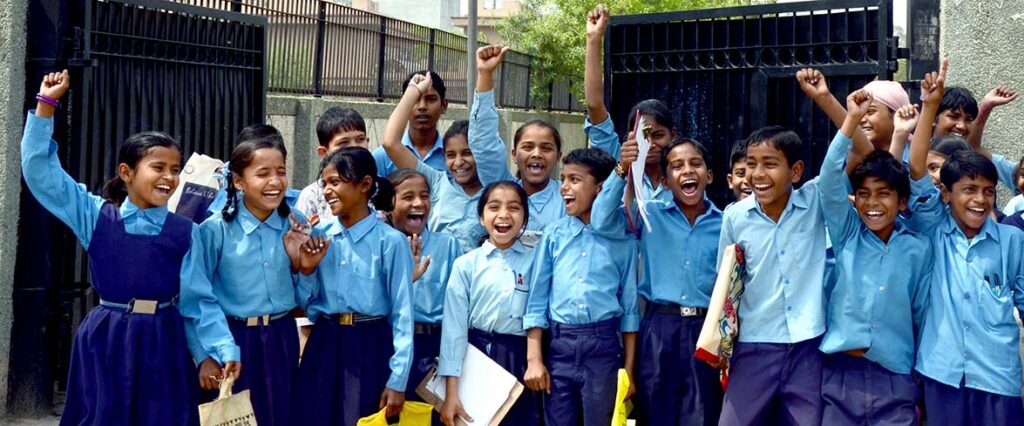
The National Education Policy (NEP) 2020 aims to transform education in India by making learning more inclusive, flexible, and accessible. One of its key goals is universal school education from early childhood through the secondary level by 2030.
The policy focuses on improving foundational learning, promoting school readiness, reducing school dropout, strengthening teacher training, and expanding access to quality education for children from disadvantaged communities. Together with other government education programmes, NEP 2020 seeks to ensure that every child receives the support needed to stay in school and succeed.
CRY works with children, families, communities, schools, and local authorities to ensure that every child can access quality education. The organisation identifies children who are out of school, supports their enrolment, encourages regular attendance, and works to prevent children from dropping out.
CRY also addresses the root causes that keep children away from school, including child labour, early marriage, gender discrimination, migration, and poverty. By working closely with communities, CRY helps create an environment where children can continue learning and realise their full potential.
Explore CRY's Education Initiatives
Ensuring every child is in school requires sustained action at every level. Greater investment in quality schools, trained teachers, safe learning environments, and support for vulnerable families is essential. Communities, parents, governments, and organisations must work together to remove barriers that prevent children from learning and strengthen education for all across the country.
Support a Child's Education Today
Education has the power to change lives, break the cycle of poverty, and build stronger communities. Every child deserves the chance to learn, dream, and achieve their potential. By strengthening education in India and ensuring that no child is left behind, we can create a future where every child enjoys their right to education and the opportunity to build a better life.
Millions of children remain out of school because of poverty, child labour, migration, gender discrimination, financial hardship, and limited access to quality schools. These challenges often force children to leave school early or prevent them from enrolling in the first place, particularly among vulnerable and marginalised communities.
The biggest barriers include poverty, school dropout, child labour, poor school infrastructure, lack of trained teachers, migration, gender inequality, and social discrimination. These issues often overlap, making it difficult for many children to access and complete their education.
Poverty makes it difficult for families to afford school-related expenses such as uniforms, books, transport, and learning materials. Many children are also expected to contribute to the family income or help with household work, increasing the risk of school dropout and limiting their future opportunities.
The Right to Education Act, 2009, and the National Education Policy (NEP) 2020 are among the key initiatives that aim to improve access to quality education. They focus on increasing enrolment, strengthening school readiness, reducing school dropout, and ensuring that every child has an equal opportunity to learn.
Individuals can support organisations like CRY, spread awareness about children's education rights, encourage school enrolment within their communities, and advocate for equal access to quality education. Collective action can help ensure that every child benefits from education for all and has the opportunity to build a brighter future.
Social media is now a regular part of many children's lives, helping them learn, connect and have fun. However, it also brings risks such as bullying....
Read More
A hotter summer can mean more than an uncomfortable day for a child. It can make it harder to concentrate in class or spend time outdoors. Heavy rain....
Read More All our efforts are made possible only because of your support
 Your donations are tax exempted under 80G of the Indian Income Tax Act
 Your donation transactions are completely safe and secure


Spread the word on social media and join the movement to raise awareness about the importance of girls completing their education.


Spread the word on social media and join the movement to end the shame around periods. #LetsTalkAboutPeriods