The Importance of Children’s Mental Health in Rural India
Summary on Mental Health in Rural IndiaMental health is crucial for children's overall well-being and development, especially regarding mental he....
Read More
India is currently facing a complex health crisis known as the triple burden of malnutrition, where undernutrition, overnutrition, and micronutrient deficiencies exist at the same time. According to the National Family Health Survey (NFHS-5), around 35% of children under five in India are stunted, nearly 67% are anaemic, and about 3% are overweight. This means while many children aren't getting enough food, others are consuming diets high in calories but low in essential nutrients, and nearly two-thirds lack essential vitamins and minerals. These problems are driven by a mix of poverty, poor maternal health, and changing dietary habits, requiring urgent action from both the government and civil society.
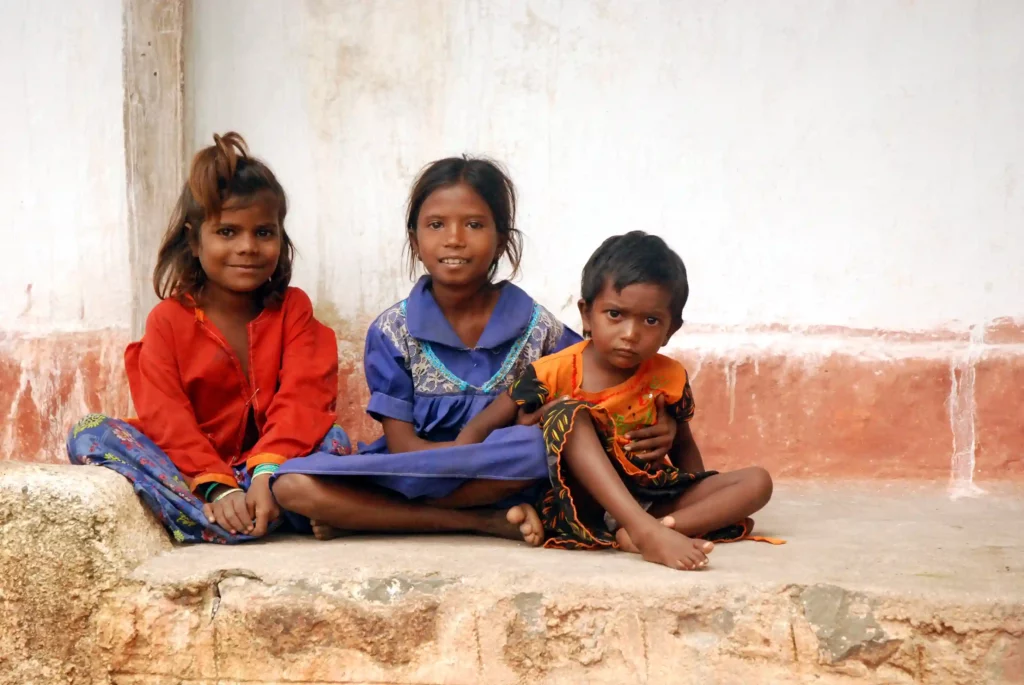
The triple burden of malnutrition (TBM) refers to the coexistence of undernutrition, overnutrition, and micronutrient deficiencies. Understanding what is triple burden of malnutrition becomes especially relevant in India, where a nutrition transition has led to underweight and overweight children living in the same households. Poor diet quality often causes obesity and hidden nutrient deficiencies simultaneously.
Good nutrition is essential for a child’s physical growth, brain development, and learning ability. Malnutrition in early life does more than affect body weight; it permanently impairs cognitive development. Poor nutrition during the first 1,000 days can cause irreversible damage, leading to poor school performance and reduced social and economic productivity in adulthood.
Despite improvements in healthcare, millions of young children in India are still failing to thrive. The National Family Health Survey (NFHS-5) reveals a grim reality where progress in reducing undernutrition has stagnated while rates of anemia and overweight are climbing.
Stunting, or being too short for one’s age, is a sign of chronic undernutrition and cumulative growth deficits. As per NFHS-5 (2019-21), approximately 36% of Indian children under 5 are stunted. This silent crisis is most severe in the central and eastern regions of the country, with states like Uttar Pradesh and Bihar being identified as major "hotspots". Factors like being a male child, having a high birth order, or being born to an uneducated mother significantly increase the risk of a child being stunted.
Anemia is the most prevalent form of malnutrition in India. As per NFHS-5 (2019-21), it affects close to 67% of children aged 6–59 months. It is a condition where the blood has low levels of hemoglobin, often due to iron deficiency. This problem is so widespread that 90% of districts in India have a prevalence rate higher than 50%. Children born to anemic mothers are 66% more likely to be anemic themselves, showing how the cycle of malnutrition continues across generations.
While India fights hunger, it is also witnessing a steady rise in childhood overweight and obesity. About 3% of children are now overweight, NFHS-5 (2019-21), a trend that is most visible in northern and north-eastern India. This problem is often linked to the consumption of ultra-processed foods that are high in sugar, fat, and sodium but offer no real nutritional value.
Also Read: International Day of Women and Girls in Science
Poverty remains a primary driver of malnutrition because poor families often cannot afford a diverse and nutritious diet. Many households in low-income groups rely on cheap, calorie-dense but nutrient-poor foods, which leads to both undernutrition and micronutrient gaps. Interestingly, while the poorest suffer from a lack of food, higher-income households are increasingly seeing a rise in overweight children due to greater access to packaged and ultra-processed foods..
The way a child is fed in their earliest years is vital for their health. Unfortunately, many children are at risk due to a lack of breastfeeding or the use of poor-quality complementary foods. Cultural beliefs and myths sometimes discourage the consumption of nutrient-rich items.
Access to healthcare and sanitation is still unequal across India. Rural areas, where 73% of the studied population lives, often face a higher burden of stunting and anemia due to limited health infrastructure and poverty.
Also Read: Child Vaccination Chart
Malnutrition is an underlying factor in a large proportion of deaths among children under five in India. Beyond the risk of death, it leads to increased morbidity and high healthcare costs. The physical and mental impairments caused by early-life malnutrition are often irreversible. Children who suffer from these conditions are more likely to face chronic lung diseases, respiratory infections, and persistent lethargy, which hampers their ability to lead a productive life as adults.
Also Read: Protein Energy Malnutrition
To fix this, India needs a strategy that goes beyond just providing calories. Experts suggest that the focus of health services must expand focus beyond the first 1,000 days to include early childhood and school-age years, when diet and habits continue to shape long-term health. We also need to monitor the "food environment" by using front-of-package warning labels to help parents identify and avoid unhealthy foods.
The Indian government has launched several major programs to fight this issue. The Integrated Child Development Scheme (ICDS) has worked for over 45 years to address undernutrition. In 2017, the POSHAN Abhiyaan (National Nutrition Mission) was started to provide a unified response to malnutrition among children and women. Other efforts like Swachh Bharat Abhiyan aim to reduce stunting by improving sanitation and hygiene. However, there is still a need for these programmes to better address the rising rates of overweight and obesity alongside traditional undernutrition.
Organisations like CRY (Child Rights and You) play a critical role in filling the gaps. CRY India works on the ground to ensure that children's fundamental rights to health and nutrition are protected. They engage in policy advocacy to influence government bodies to improve the reach and quality of health programmes.
CRY also focuses on community awareness, teaching parents about the importance of hygiene and balanced diets to dispel harmful myths. By working with communities, schools, and local authorities, CRY helps strengthen the implementation of schemes like the Mid-Day Meal programme, ensuring more children can access regular, nutritious food and stay in school. Their comprehensive approach aims to break the cycle of poverty and malnutrition, creating a healthier future for the next generation
Support child health and nutrition through CRY India and help children fight malnutrition.
India faces severe nutritional challenges: around 35% of children under five in India are stunted, nearly 67% are anaemic, and about 3% are overweight (Source: NFHS-5). These figures highlight the simultaneous presence of undernutrition, micronutrient deficiencies, and rising overnutrition.
Countries like Brazil and Thailand have reduced malnutrition through integrated nutrition, health, and social protection programmes. Chile’s front-of-pack food warning labels and Japan’s strong school meal systems have also successfully improved diet quality and reduced childhood obesity.
Schools can provide balanced mid-day meals, nutrition education, and regular health screenings. They also shape lifelong eating habits by promoting healthy foods, limiting junk food access, and teaching children and parents about balanced diets and hygiene practices.
Nutrition in the first 1,000 days is critical for physical growth and brain development. Adequate early nutrition prevents stunting, anaemia, and obesity, reduces future risk of chronic diseases, and improves educational outcomes, productivity, and overall health across the life course.
Summary on Mental Health in Rural IndiaMental health is crucial for children's overall well-being and development, especially regarding mental he....
Read More
Summary/TL;DREmotional development is crucial for children's growth, influencing their ability to express, manage, and understand feelings throug....
Read More All our efforts are made possible only because of your support
 Your donations are tax exempted under 80G of the Indian Income Tax Act
 Your donation transactions are completely safe and secure


Spread the word on social media and join the movement to raise awareness about the importance of girls completing their education.


Spread the word on social media and join the movement to end the shame around periods. #LetsTalkAboutPeriods