Unspent CSR Funds in India: Why Children Are Losing Out and What Needs to Change
CSR spending in India has the potential to create meaningful change in children's lives by supporting education, healthcare, nutrition, and protectio....
Read More
India is home to the largest child population in the world. With this comes an enormous responsibility — to ensure that every child grows up healthy, educated, safe, and heard. While government programmes form the backbone of child welfare efforts, the role of the private sector has grown significantly over the last decade.
A corporate social responsibility NGO partnership has emerged as one of the most effective models for channelling corporate resources into real, ground-level change for children. When businesses align their CSR commitment with the country's child rights agenda, the impact reaches communities that need it most.
India's CSR mandate is governed by Section 135 of the Companies Act, 2013. It requires companies meeting certain financial thresholds — a net worth of ₹500 crore or more, a turnover of ₹1,000 crore or more, or a net profit of ₹5 crore or more — to spend at least 2% of their average net profit over the preceding three years on CSR activities.
This law has made India a global leader in mandated corporate giving. It has channelled billions of rupees into social development, with education and child welfare consistently among the highest-funded categories year on year.
The United Nations Convention on the Rights of the Child (UNCRC), which India ratified in 1992, provides a universal framework built on four core rights: survival, protection, development, and participation. India's national laws — including the Right to Education Act, the POCSO Act, and the Juvenile Justice Act — are aligned with these principles.
When companies design CSR campaigns rooted in these four pillars, they are not just doing good — they are actively reinforcing a rights-based approach to childhood that is backed by both international standards and Indian law.
Children represent both the most vulnerable section of society and its greatest future asset. Investing in children during their early and formative years yields long-term returns for communities, economies, and societies at large.
Beyond the legal mandate, there is a growing recognition among Indian businesses that sustainable development is impossible without securing the foundations of childhood — nutrition, education, safety, and opportunity. This is why more companies are choosing to partner with NGO organisations that have deep expertise in child rights to shape and deliver their CSR programmes.
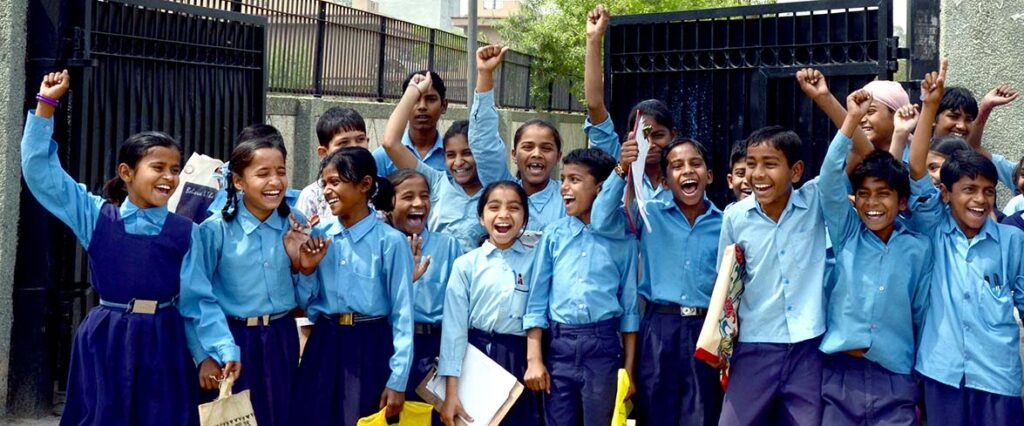
The four pillars of the UNCRC offer a clear lens through which to understand how CSR is making a difference for children in India today.
Millions of children in India are still at risk from preventable conditions — malnutrition, anaemia, lack of clean water, and inadequate immunisation coverage. CSR campaigns focused on child survival are funding mobile health units, nutrition supplementation programmes, safe drinking water infrastructure, and community health awareness in some of the most underserved districts of the country.
According to UNICEF India, child malnutrition remains a serious challenge, particularly in rural areas. Corporate funding is helping to bridge critical gaps in reach and delivery of nutrition programmes.
Child labour, abuse, and trafficking continue to rob children of their childhoods. CSR-backed protection programmes are supporting child helplines, training communities to identify and report abuse, and funding legal aid for children in distress.
India's Protection of Children from Sexual Offences (POCSO) Act and the Child Labour (Prohibition and Regulation) Act provide the legal framework for protection. CSR investment in awareness and implementation strengthens the reach of these laws beyond urban centres into villages and towns where children are most at risk.
Education is the single most powerful tool for breaking cycles of poverty. CSR in education covers a wide range of interventions — from building school infrastructure and stocking libraries to running after-school learning centres, supporting teacher training, and introducing digital classrooms in government schools.
Adolescent skill-building programmes funded through CSR are also helping young people transition from school to livelihood, equipping them with vocational skills and confidence for the workforce. This is where a strong corporate social responsibility NGO partnership truly delivers lasting value.
One of the most overlooked aspects of child rights is participation — the right of children to express their views and have them taken seriously. CSR-backed programmes are increasingly creating platforms for children to participate in decisions about their schools, communities, and futures.
Children's clubs, school parliaments, and community forums supported by NGO partners give children — particularly girls and children from marginalised communities — a voice and a sense of agency. This not only builds self-confidence but also strengthens democratic values from an early age.
Across India, companies are moving beyond one-time donations to build sustained, outcome-focused CSR partnerships with NGOs. The most effective programmes share common traits: they are co-designed with communities, implemented by experienced NGO partners, monitored rigorously, and reported transparently.
Some notable examples of how corporates are driving change include:
The common thread across all these efforts is sustained CSR commitment — not a one-year project, but a multi-year investment in a community's children and their futures.
As India's development landscape evolves, so do the challenges facing children. The future of effective CSR for children will need to respond to emerging issues while reinforcing the foundational pillars of child rights.
Three new frontiers are reshaping the CSR agenda for children:
For companies looking to make a meaningful CSR commitment to children, a few guiding principles can help:
CSR is not only a corporate responsibility — it thrives when citizens are engaged and informed. Members of the public can support corporate-backed child welfare efforts in several ways:
When citizens, corporates, and civil society work together, the impact on children multiplies.
The journey toward securing child rights in India is a shared one. No single actor — government, corporate, or civil society — can accomplish it alone. What India's children need is a coordinated, sustained effort that draws on the strengths of each.
For Indian corporates, the CSR mandate is more than a compliance requirement. It is an opportunity to help shape a generation — to ensure that the children growing up in India today have access to health, safety, education, and a voice in their own futures.
Through meaningful corporate social responsibility NGO partnerships, thoughtfully designed CSR campaigns, and a genuine CSR commitment to child rights, the private sector can leave a legacy that outlasts any product or profit margin. The future of India's children depends on all of us — and businesses have both the resources and the responsibility to lead.
Indian corporates are contributing to child rights by funding education programmes, child protection initiatives, healthcare and nutrition drives, and skill-building projects through their CSR budgets. Many companies partner with NGOs that specialise in child rights to design and implement these programmes, ensuring that resources reach the most vulnerable children in urban and rural communities alike.
Several large Indian corporations across sectors such as technology, manufacturing, banking, and consumer goods have made child welfare a core part of their CSR commitment. Companies with significant CSR spends are increasingly directing funds toward education, child protection, and nutrition. The Ministry of Corporate Affairs' annual CSR reporting data provides a public record of sectoral allocations by eligible companies.
A sustainable CSR initiative for children is one that is community-rooted, outcome-focused, and built for the long term. Key factors include partnering with experienced NGOs, setting measurable goals, investing in rigorous monitoring, and engaging families and communities in programme design. Multi-year funding commitments tend to produce deeper and more lasting results than short-term, one-off projects.
CSR investment strengthens child rights protection by funding awareness programmes, community training, and implementation support for laws such as the POCSO Act, the Child Labour Act, and the Right to Education Act. When companies partner with NGOs to take these legal frameworks into communities — especially in remote or underserved areas — it ensures that more children are aware of their rights and that more adults are equipped to protect them.
CSR spending in India has the potential to create meaningful change in children's lives by supporting education, healthcare, nutrition, and protectio....
Read More
Today's businesses are expected to create value not only for shareholders but also for society. This is where corporate social responsibility can mak....
Read More All our efforts are made possible only because of your support
 Your donations are tax exempted under 80G of the Indian Income Tax Act
 Your donation transactions are completely safe and secure


Spread the word on social media and join the movement to raise awareness about the importance of girls completing their education.


Spread the word on social media and join the movement to end the shame around periods. #LetsTalkAboutPeriods