Children and Social Media: Staying Safe from Online Risks
Social media is now a regular part of many children's lives, helping them learn, connect and have fun. However, it also brings risks such as bullying....
Read More
For many children, science is still something that exists only in textbooks, rarely in something they can touch, test, or question.
Yet, science education in India is at a turning point. As the country moves toward a more innovation-driven future, the focus is shifting from simply getting children into classrooms to improving the quality of education in India, especially in rural and underserved communities.
Because education is not just about attendance. It’s about understanding. It’s about confidence. And for every child, it’s about the moment they realise: I can learn this.
In 2026, that shift is beginning to take shape, but not equally for all children.
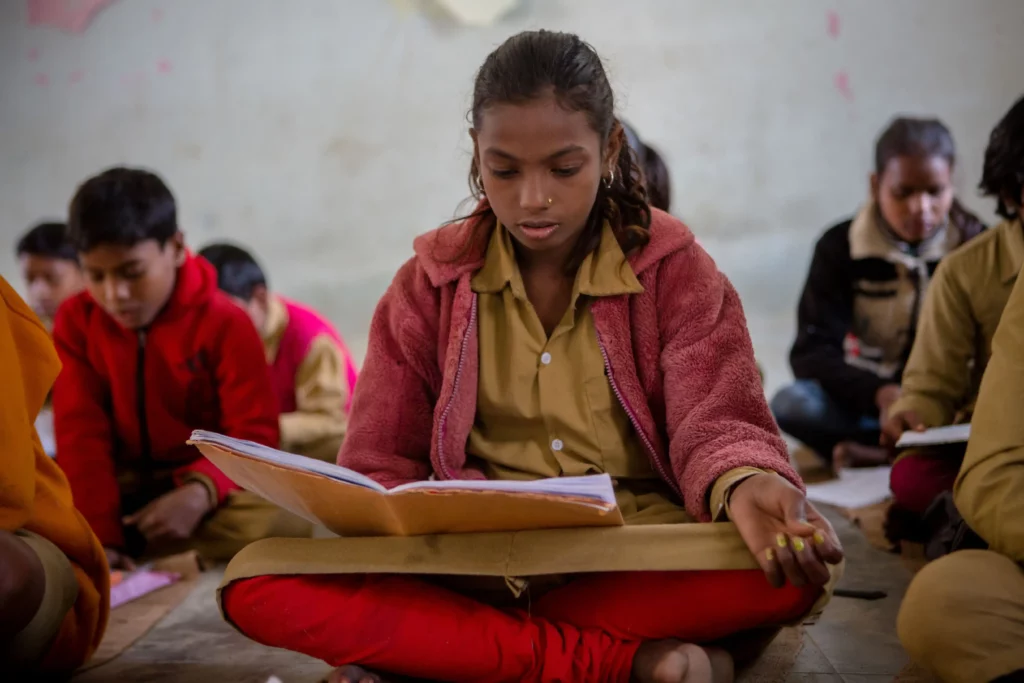
Access to schooling has improved significantly across India. But when it comes to science education in India, access does not always translate into meaningful learning.
In many rural classrooms, science is still taught through rote methods, with little opportunity for experimentation or exploration. Without practical exposure, concepts remain abstract and difficult to grasp.
This gap between being taught and actually understanding continues to affect the quality of education in India, especially for children growing up in marginalised communities.
Also Read: Importance of STEM Education for Children in India
Many schools lack adequately trained science teachers, making it difficult for children to build strong foundational concepts.
Without access to labs or simple materials, science remains theoretical rather than experiential.
Scientific concepts are often taught in unfamiliar languages, limiting comprehension and engagement.
Girls continue to face social and systemic barriers that restrict their participation in science education in India.
Also Read: Gender Inequality in Indian Education
Education development in India is increasingly moving toward improving learning outcomes, not just enrolment. There is growing recognition that children need to understand, question, and apply what they learn.
Across many classrooms, the way science is taught is slowly evolving, becoming less about memorising definitions and more about making sense of the world around them. Digital tools, updated curricula, and teacher training are contributing to this shift.
But for this progress to be meaningful, it must reach children in rural India, where the need to strengthen the quality of education in India remains the most urgent.
These initiatives are creating spaces where children can experiment, build, and think creatively—making science more engaging and hands-on.
With improved infrastructure and technology-enabled learning, these efforts aim to strengthen science education in India at the grassroots level.
Also Read: A Review of the National Education Policy (NEP) 2020
Improving science education in India requires more than policy, it requires consistent, on-ground engagement with children, teachers, and communities.
In areas where CRY works, efforts focus on strengthening the entire learning environment. Teachers are supported through training that encourages activity-based learning, helping them move beyond textbook instruction. Schools are enabled with basic science materials, often using simple, locally available resources to explain concepts.
Classrooms begin to change in small but powerful ways. A child asks a question without hesitation. A concept becomes clearer through a simple demonstration. Learning starts to feel less intimidating—and more possible.
CRY also works closely with communities to ensure children, especially girls, continue their education. By addressing barriers like irregular attendance and social norms, these interventions help make science education more inclusive.
These shifts may seem small, but they play a critical role in improving the quality of education in India, ensuring that children don’t just attend school, but truly learn.
Help a Child Discover the Joy of Learning
For science education in India to truly transform, children need more than access to classrooms. They need environments that encourage curiosity, teachers who can simplify complex ideas, and opportunities to learn through doing.
Equally important is the role of families and communities. When education is valued and supported at home, children are more likely to stay engaged and continue learning.
Bridging the gap between policy and practice will be key. Because when children in rural India experience the same quality of education as their urban peers, it doesn’t just change individual futures—it strengthens entire communities.
Also Read: Education in Rural India
Science education in India is evolving, but the journey is far from complete.
Every child deserves the opportunity to explore, question, and understand the world around them. Strengthening the quality of education in India—especially in rural areas—will require continued effort, collaboration, and commitment.
Because when a child begins to understand how the world works, they also begin to imagine how they can shape it.
Also Read: Encouraging Girls Toward STEM Careers
Science education in India helps children ask questions, explore their surroundings, and understand how things work. For children in rural areas, it can open up opportunities beyond their immediate environment, strengthening both their confidence and future choices while improving the overall quality of education in India.
The government is working to improve the quality of education in India through initiatives that promote experiential learning, digital classrooms, and better teacher training. Programmes like PM SHRI schools and innovation labs aim to make science education in India more interactive and accessible, especially for children in rural areas.
The National Education Policy (NEP) 2020 has strengthened science education in India by promoting inquiry-based and experiential learning. It encourages critical thinking, flexibility in subjects, and the use of technology, helping improve the quality of education in India by making learning more engaging and relevant.
CRY supports science education in India by working directly with schools and communities to improve learning conditions. This includes teacher training, access to simple learning materials, and encouraging participation among marginalised children, especially girls—helping strengthen the quality of education in India in an inclusive and sustainable way.
Social media is now a regular part of many children's lives, helping them learn, connect and have fun. However, it also brings risks such as bullying....
Read More
A hotter summer can mean more than an uncomfortable day for a child. It can make it harder to concentrate in class or spend time outdoors. Heavy rain....
Read More All our efforts are made possible only because of your support
 Your donations are tax exempted under 80G of the Indian Income Tax Act
 Your donation transactions are completely safe and secure


Spread the word on social media and join the movement to raise awareness about the importance of girls completing their education.


Spread the word on social media and join the movement to end the shame around periods. #LetsTalkAboutPeriods