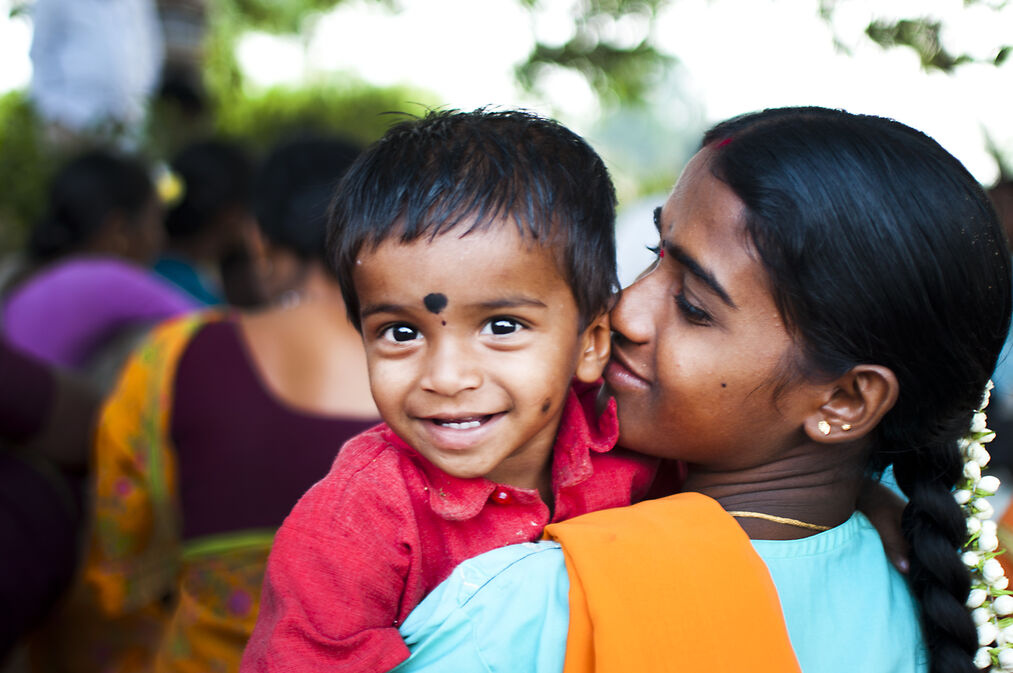
Learning Outcomes in India: Why Going to School Is Only the First Step
Going to school is an important part of every child’s development, but enrolment alone does not guarantee that meaningful learning is taking place.....
Read More
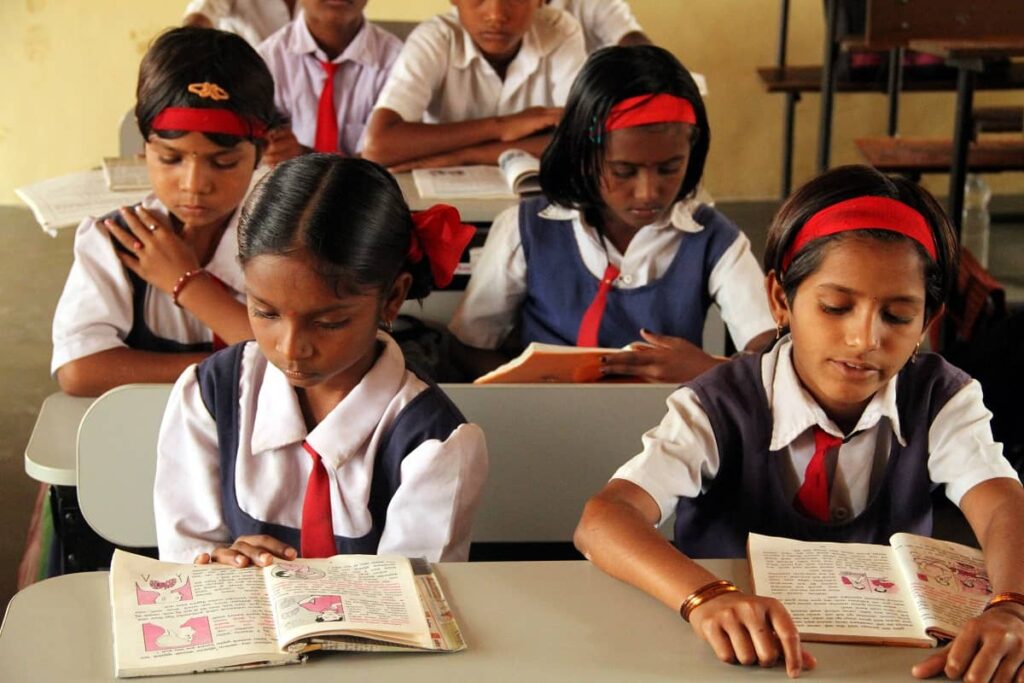
India is still far from achieving gender equality and its skewed sex ratio of 940 females per 1000 males bears witness to this fact. A girl child in India is often seen as a liability, a ‘burden’ to pass on. Given the prevailing influence of patriarchal values, right from their birth, a lot many girls bear the brunt of gender inequality, gender stereotypes and are treated inferiorly, as compared to boys.
No matter how talented and ambitious she is, the girl child often receives the shorter end of the stick. In fear of exploitation and abuse, many girls are not sent to school and kept at home only to be married off early. And even if she is not married off, the young girl is still denied a deserving education, quality healthcare, employment opportunities and equal rights that a boy easily gets. While some girls manage to ‘escape’ from the shackles and try to build a bright future, most resign to their ill fate.
How can we hope for India to progress when half of our society remains under the shadow of discrimination? To find answers, we must first understand the key difficulties that a girl child faces and why the education of a girl child is important in society.
Also Read: Period Shaming
Many issues contribute to the challenges of girl child education in India. From poverty and child marriage to safety issues and poor infrastructure, girls in rural and many backward communities face hurdles before they can even reach a classroom. These problems faced by girl children in India often push them out of school and into roles where their potential remains buried and unexplored.
Even when a girl manages to study in her younger years, the problems of girls’ education do not disappear. Pursuing higher education becomes difficult for many girls as a result of household responsibilities, cultural norms, or lack of financial support. This not only stops them from achieving their goals but also provides a better and improved way of living, not just for their families but also for the entire communities.
While the importance of girl child education is now known by almost everyone, it is also essential to not ignore the challenges that a girl has to face for her education.
While there are laws that ban sex-determination of a foetus and selective abortion, this practice continues in the shadows. This not only negatively impacts the number of girls born, but also affect the health and safety of the mother. Consecutive pregnancies with the hope of a boy take a toll on the physical as well as mental health as it is the woman who gets blamed for the sex of the baby. Stricter implementation and monitoring of laws, and better awareness, is essential to help the girl child survive.
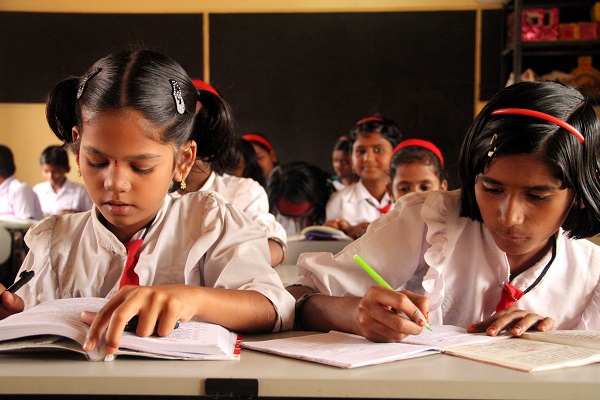
Recent national data reveals that the dropout rate for girls at the elementary level are 4.10% which rises to 16.88% at the secondary level, with the figures being substantially higher for girls from vulnerable groups (19.05% for SC and 24.4% for ST groups) (U-DISE 2015-16). The retention rate of girls at the elementary level is 70.6% which drops to secondary level is 55.5% (U-DISE 2016-17). Due to existing attitudes regarding girls’ education, safety concerns, distance between home and school, lack of affordable sanitary napkins, absence of separate and functional toilets, and poor school infrastructure, several teenage girls tend to become irregular in attending schools or drop out before completing their schooling. Only one in every three girls in India completes school education age-appropriately (U-DISE 2016-17).
Out of the 12.15 million children married in India, 8.9 million are girls, and married girls are three times the boys. As per Census 2011, there are about 3 million children below age 14 that are married. Rural girls constitute 55% of married children. Child marriage robs girls of their childhood as they step into adult roles that they are unprepared for – be it managing households, bearing children, making decisions and so on. It not only hampers her schooling but also pushes young girls into early pregnancy which harms the health and nutrition of the teenage mother as well as her child.
A girl child is an easy target and is usually at the receiving end of abuse and domestic violence, which more often than not goes unreported. In rural areas, parents are reluctant to send their daughters to school fearing their safety. Latest data released by the National Crime Records Bureau also reveals that kidnapping, abduction and sexual offenses against children were among the top two crimes committed against children. 28% of all rape victims were girls under age 18 and out of the total number of children that went missing in the year 2018, 70% were girls.
Extreme taboos, lack of affordable sanitary napkins, lack of decent functioning toilets, and inadequate school infrastructure are some of the reasons that stop girls from going to school. In many schools in India. There are no separate toilets for boys and girls. In such cases, girls face embarrassment in using the toilet and so, they might drop out of school. Also, often education about menstruation is not imparted due to which many girls fall into the trap of social superstitions and take a decision to leave school only because they have started menstruating.
Also Read: Gender Inequality in Education in India
For many families living in poverty, sending children to school is a financial burden. Often, boys are prioritised for education while girls are kept at home to help with chores. Poverty remains one of the biggest problems of girl child education in India, as it directly influences whether a girl is allowed to continue her studies or not.
Early marriage often leads to adolescent pregnancy, which not only ends a girl’s education but also puts her health and future at risk. Once married, girls are expected to manage households, making it nearly impossible for them to return to school.
Safety is a pressing concern for families. Long distances to schools, lack of secure transportation, and incidents of gender-based violence create fear and hesitation among parents. These issues discourage many families from sending their daughters to school regularly.
The absence of clean and separate toilets is another major barrier. In rural areas, many schools lack basic infrastructure, including safe drinking water and private spaces for girls. This discourages attendance, particularly during adolescence, and reflects one of the very practical problems faced by girl children in India.
Menstruation continues to be surrounded by stigma and shame. Many girls miss several days of school every month because of the lack of sanitary facilities and the taboo surrounding the subject. Over time, this gap adds up and leads to dropouts, showing how menstruation can directly impact education.
Cultural expectations and stereotypes still hold back girls. In many communities, girls are expected to cook, clean, and look after siblings instead of going to school. This mindset sees education as unnecessary for girls and reinforces gender inequality.
Having female teachers in schools is important. They provide comfort, guidance, and role models for young girls. Unfortunately, many rural schools face a shortage of female teachers, which makes parents hesitant to send their daughters to school and reduces the motivation for girls to continue their education.
Another challenge is child labour. Families struggling financially often push their daughters into work, whether at home or outside, to contribute to the household income. This takes them away from classrooms permanently, cutting off their chance at a brighter future.
In our country, many people are unaware of how the right to education of the girl child can transform lives for the better. It is a sad state of affairs when people across socio-economic strata think that investing in a girl child’s education is a waste of money. The fact that they would rather justify spending on their daughter’s marriage expenses or dowry instead of their education is even more disheartening. It is essential that society understands the benefits of girl child education and gives importance to it.
Early education can be instrumental in shaping society toward progress. When a girl is educated, she is empowered. She can make decisions for herself, raise the standard of living for her family and children, generate more employment options, and reform society as a whole. Therefore, a change in the mindset towards girl child education in India is the need of the hour. Every girl child must be treated equally with love and respect.
There are still many locations in India where topics such as menstruation are considered a bad omen and menstruating girls are separated from the usual facilities for those 5-7 days. This often leads to poor hygiene which can cause several health issues. When these girls get educated, such ideas and mensuration taboos should be talk openly and get eradicated gradually and make society a better place to live for girls.
Education not just makes a girl knowledgeable and confident but also makes her capable of being financially independent. The power of education is the only way to achieve equality in society and also to add to the GDP of the country. It was found in McKinsey Gender Parity study that educated girls can join the professional workforce and can help in boosting the country’s GDP by about $770 billion by the year 2025.
The government has been making persistent efforts to raise the status of the girl child in society as well as incentivize her education through various schemes and programs to remove the gender inequality. These have surely contributed to girls’ education to an extent yet a lot more needs to be done for girls to be truly treated as equal to boys.
Also Read: Infant Mortality Rate
Building better schools with proper sanitation, separate toilets, and menstrual hygiene management facilities can make a huge difference. When girls feel comfortable and safe in schools, they are more likely to stay and complete their education.
Change begins at home and within communities. Families must be encouraged to see the value of girls' education in India. Awareness campaigns, local champions, and community-led initiatives can help shift age-old mindsets that prevent girls from learning.
When girls see women role models who have broken barriers and succeeded, they are inspired to dream bigger. Female mentors and teachers can play an essential role in encouraging girls to stay in school and pursue careers.
Reliable and safe transportation options, secure school premises, and strict measures against harassment are critical. When parents know their daughters are safe, they are more willing to send them to school every day.
India already has laws that prohibit child marriage and child labor and ensure the right to education. However, stricter enforcement is needed. Communities must be made aware of these laws, and violations should be dealt with firmly to protect girls’ futures.
In our country, many people are unaware of how the education of the girl child can transform lives for the better. It is a sad state of affairs when people across socio-economic strata think that investing in a girl child’s education is a waste of money. The fact that they would rather justify spending on their daughter’s marriage expenses or dowry instead of their education is even more disheartening. Early education can be instrumental in shaping the society towards progress. When a girl is educated, she is empowered. She can make decisions for herself, raise the standard of living for her family and children, generate more employment options and reform the society as a whole. Therefore, a change in the mindset towards girl child education in India is the need of the hour. Every girl child must be treated equally with love and respect.
The government has been making persistent efforts to raise the status of the girl child in the society as well as incentivize her education through various schemes and programs. These have surely contributed to girls’ education to an extent yet a lot more needs to be done for girls to be truly treated as equal to boys.
At CRY India, we believe that every girl deserves the right to learn, to play, and to live with dignity. Our work focuses on tackling the problems faced by girl children in India by addressing both immediate barriers and long-term change.
We work with schools to improve infrastructure, ensuring clean toilets, safe classrooms, and access to menstrual hygiene management. We engage with parents and community leaders to create awareness about the problems of girls's education and the importance of giving girls equal opportunities.
By creating safe learning environments, CRY India also ensures that girls have access to teachers, resources, and mentors who can inspire them. We support programmes that prevent child marriage and child labour, ensuring that girls are not pushed into responsibilities too early.
Most importantly, we work to change mindsets. We believe that when families and communities start valuing girls’ education, real change begins. Through partnerships, advocacy, and grassroots efforts, CRY India is making sure that girl child education in India is not a privilege but a right for every girl.
When you support CRY India, you become part of this change. You help us bring girls back to school, keep them safe, and give them the chance to dream beyond the barriers that hold them back.
The impact of educating a girl extends far beyond the individual. An educated girl is more likely to make informed decisions about her health, career, and future. She is also better equipped to support the education and well-being of her children, creating a positive cycle that can continue across generations.
When girls receive quality education, communities benefit through improved health outcomes, greater economic participation, and reduced poverty. Educated women often become role models within their families and neighbourhoods, encouraging others to pursue education and challenge harmful social norms. Investing in girl child education is therefore not just about empowering one individual; it is about transforming entire generations and building stronger, more resilient communities.
While significant progress has been made, achieving equal access to education for every girl requires sustained effort. Addressing barriers such as poverty, child marriage, safety concerns, inadequate school infrastructure, and gender stereotypes remains essential.
Strengthening existing government initiatives, improving school facilities, increasing awareness among families, and creating safe learning environments can help bridge the gender education gap. Greater community participation, stronger enforcement of child protection laws, and increased support for girls from vulnerable backgrounds are also critical. By working together, governments, schools, communities, and organisations can ensure that every girl has the opportunity to learn, grow, and contribute to India's future.
Cultural expectations often place household chores and sibling care on girls, leaving them little time for schooling. Many families believe a girl’s role is at home, not in classrooms.
Poverty forces families to make tough choices. Limited resources often go towards educating boys, while girls are kept at home or sent to work to support the household.
When schools lack toilets, safe buildings, or proper transportation, parents fear for their daughters’ safety. This makes them reluctant to send girls to school regularly.
Due to the stigma around menstruation and the lack of proper sanitary facilities in schools, many girls stay at home during their periods. This leads to irregular attendance and, eventually, dropouts.
Girl child education is important because it empowers girls with knowledge, skills, and confidence to make informed decisions about their lives. It promotes gender equality, improves family well-being, and contributes to the social and economic development of the country.
Girls often face challenges such as poverty, child marriage, safety concerns, gender stereotypes, inadequate school infrastructure, lack of sanitation facilities, and household responsibilities. These barriers can limit access to education and increase dropout rates.
Educating a girl can lead to better health outcomes, increased employment opportunities, financial independence, and improved living standards for families. It also helps reduce poverty and promotes positive social change within communities.
The Government of India supports girl child education through various initiatives such as Beti Bachao Beti Padhao, Kasturba Gandhi Balika Vidyalaya, Sukanya Samriddhi Yojana, and scholarships designed to encourage girls to enrol in and complete their education.
Educating girls strengthens the workforce, increases economic productivity, and supports national development. It also promotes gender equality, improves health and social outcomes, and helps create more inclusive and progressive communities.
Going to school is an important part of every child’s development, but enrolment alone does not guarantee that meaningful learning is taking place.....
Read More
An Assam flood can disrupt a child's life in ways that go far beyond the immediate loss of a home or access to food. Flooding can force families to l....
Read More All our efforts are made possible only because of your support
 Your donations are tax exempted under 80G of the Indian Income Tax Act
 Your donation transactions are completely safe and secure


Spread the word on social media and join the movement to raise awareness about the importance of girls completing their education.


Spread the word on social media and join the movement to end the shame around periods. #LetsTalkAboutPeriods